
Monster Truck Car Racing Games
ElePant: Kids Learning Games for Toddlers & BabyEducational
0.00.00 Reviews
- Version
- 12
- Installs
- 50.00K
- Age Rating
- Everyone
Screenshots
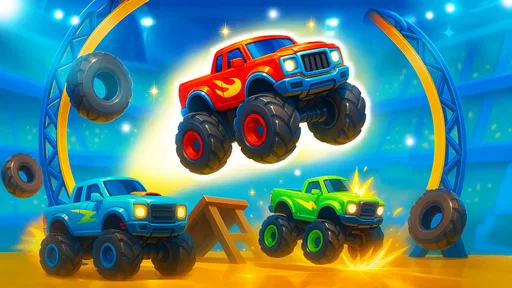
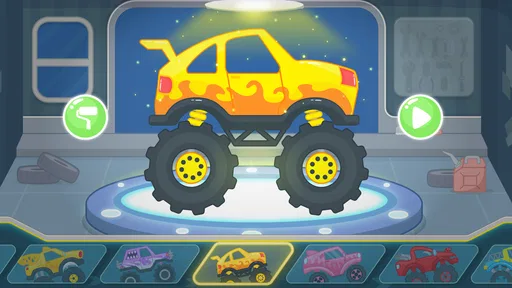
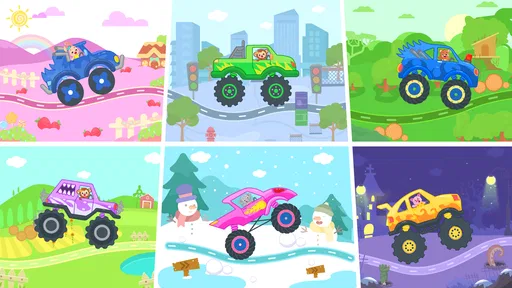
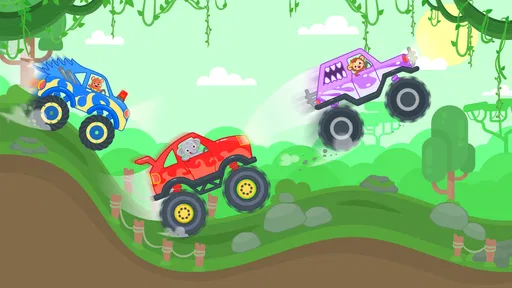
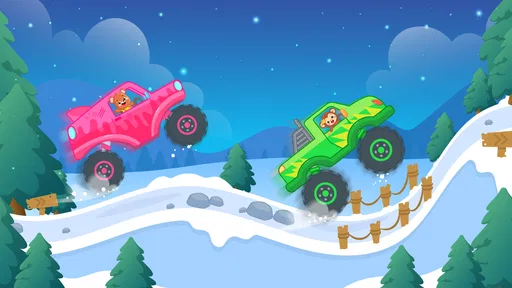
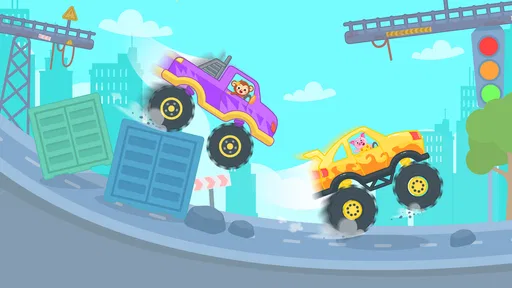
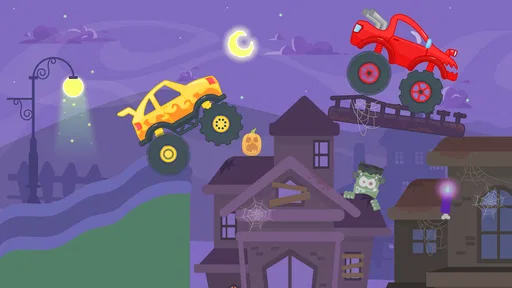
Our Review of Monster Truck Car Racing Games
 Analysis by Appyee
I first approached Monster Truck Car Racing Games expecting a very simple driving activity for young children, and that expectation is important. This is not presented as a serious racing simulator or a deep vehicle game. It is an educational game from ElePant: Kids Learning Games for Toddlers & Baby, designed around car play for toddlers and children from two to five years old. My overall impression is that it works best as a short, supervised activity where the vehicle theme gives children a familiar reason to practise attention, timing, and basic touch control.
The game is free to download and suitable for Everyone, which makes it easy to consider for a family tablet or a child’s first device. It has passed 50 thousand installs, runs on Android 7.0 and later, and its current version is 12. The basic idea is approachable: children interact with monster-truck racing and small activities rather than having to understand complicated menus, rules, or racing terminology before they can begin.
What makes the experience worth discussing is not the size of the game, but the way its presentation supports its intended age group. The large vehicles, playful setting, and short-form activity design create a clear mood. At the same time, parents should view it as a focused early-learning diversion, not as a complete educational curriculum or a substitute for hands-on play.
How the first few minutes feel for a young player
The strongest first impression comes from the subject itself. Monster trucks are visually easy for children to recognise, and the racing theme gives the game an immediate sense of movement. A toddler does not need to understand a complex story to know what the main object is supposed to be doing. That clarity matters when a child is still learning where to tap and how to follow an on-screen action.
I also like the fact that the concept does not depend on realistic driving knowledge. A child can approach it as pretend play rather than needing to know traffic rules, vehicle controls, or the difference between racing classes. This lowers the entry barrier, especially for a child who has not used many games before. The design feels aimed at quick discovery: touch, observe the result, and try again.
That simplicity has a practical benefit in everyday use. If I were handing the device to a tired child while waiting at a restaurant or during a short journey, I would not want to spend several minutes explaining a complicated progression system. A monster-truck activity is easier to introduce than a conventional racing game filled with menus and upgrade screens.
Parents should still expect to help at the start. Very young children may tap randomly, press several areas at once, or leave an activity before understanding it. That is normal for this age, but it means the game is not automatically independent entertainment for every toddler. A quick demonstration can turn confusion into useful exploration, while leaving a child alone with it may produce little more than repeated tapping.
The short-session nature is another important part of the opening experience. This kind of game is more convincing when used for a few minutes at a time than when treated as a long gaming destination. Its appeal comes from immediate interaction and a friendly vehicle theme, not from a large, sustained challenge. I would introduce it as one activity in a child’s day rather than promise an endless source of novelty.
A visual language built around big, understandable ideas
The art direction is most effective when it keeps the monster truck as the visual anchor. For a young player, a large vehicle is easier to identify than a crowded scene filled with small details. The racing setting also gives the interaction a natural direction: the child can connect the truck, the road, and the idea of moving forward without needing much verbal explanation.
That visual language supports early learning in a quiet way. Children can practise noticing where an object is, watching what changes after a touch, and connecting an action with a visible response. Those are modest skills, but they are appropriate goals for a game aimed at toddlers. The educational value is therefore less about formal lessons and more about making basic interaction feel purposeful.
I would not judge the game by the standards of a console racer. Its setting is there to make simple activities inviting, not to create a detailed motorsport world. This distinction is useful because parents sometimes expect a children’s vehicle game to offer realistic tracks, advanced physics, or a large collection of cars. That is not the reason to choose this title. The better reason is that the truck theme gives familiar context to simple play.
One useful way to get more from the visual design is to talk while the child plays. I might ask the child to point to the truck, describe whether it is moving, or say what appears on the screen after a tap. This turns passive screen time into a small conversation about action and observation. The game cannot provide that human interaction by itself, but its clear subject makes it easy for an adult to add it.
The trade-off is that a focused visual style can become repetitive for older children. A child nearing the upper end of the intended age range may quickly understand the central idea and want more variety, more rules, or a stronger sense of progress. That is not necessarily a flaw; it simply shows that the game is tuned toward accessibility rather than long-term challenge.
Sound and rhythm make the activity feel playful
Sound has an important job in a toddler game because it helps confirm that an action has been noticed. In a vehicle-themed experience, the natural expectation is a lively rhythm: movement should feel active, and successful interaction should feel rewarding. The racing mood works best when audio and animation support the same simple message instead of competing for attention.
In my view, the game’s atmosphere benefits from keeping the pace easy to follow. Young children need time to recognise what is happening, decide where to touch, and notice the result. If everything changed too quickly, the racing theme could become visual noise. A calmer rhythm makes the activity more usable for beginners, even if it feels less exciting to an older child who wants constant action.
This is also where supervision can improve the experience. If a child becomes overexcited by the movement or sound, I would pause and ask them to explain what the truck is doing before continuing. That small break helps maintain attention and prevents the session from becoming a stream of automatic taps. With toddlers, pacing is not only an artistic choice; it affects whether the activity remains understandable.
Families should remember that a game’s sound may not suit every situation. In a quiet waiting room, a parent may prefer the device muted or used at a low volume. That is a practical consideration rather than a criticism of this particular title. The truck theme naturally invites energetic presentation, but the best volume and session length depend on the child and the surroundings.
The strongest mood is therefore playful and active without needing to become intense. The setting, vehicle focus, and rhythm point in the same direction. When that balance holds, the game feels coherent: it is clearly about cheerful truck play, but it still leaves enough space for a young child to understand the interaction.
Where the mechanics fit the intended age
The game’s mechanics make sense when viewed through the needs of children from two to five. At that age, the most useful interaction is often one that gives a visible response without demanding precise control. A child can learn that touching the screen has a consequence, then gradually become more deliberate about where and when to touch.
That makes it a better fit for first-time players than a traditional racing game with steering, braking, camera control, and several buttons. Those games can be enjoyable for older children, but they often turn the first experience into a test of coordination before the child has learned the basic relationship between touch and movement. Here, the monster-truck theme can provide motivation while the activities remain approachable.
There is a subtle trade-off in that accessibility. A child who already handles tablet games confidently may find the experience too gentle. I would choose it for a beginner, a younger sibling, or a child who needs a low-pressure activity, rather than for someone looking for competitive races or complex vehicle management.
The offline positioning is particularly useful for family routines. A parent can prepare the game on a device before a trip and use it in places where connectivity is inconvenient. That makes it more practical than an activity that depends on a constant connection. I would still test it at home first, check that the child understands the controls, and decide how the device will be used before relying on it during travel.
Offline play also changes how I think about in-app purchases. The game itself is free, but optional purchases range from $0.99 to $6.49 per item. For a child’s device, I would review the purchase settings before handing it over and keep the decision with the adult. A free starting point is helpful, but “free” does not mean a child should be allowed to explore purchase screens independently.
The purchase range does not automatically make the game unsuitable. It simply means the adult should establish boundaries in advance. If the free portion already provides enough activity for a short routine, there may be no reason to buy anything. If a child repeatedly asks for additional content, I would first consider whether the game is still holding attention for the right reasons or whether a different kind of play would be more valuable.
Everyday uses and the children who may benefit most
A realistic use case would be a short transition period before dinner. A parent could offer the game for a few minutes while preparing food, sit nearby, and ask the child to describe the truck’s movement. The child gets a contained vehicle activity, while the adult can end the session without interrupting a long race or complicated mission. That makes the game easier to fit into a household routine than a title built around extended progression.
It can also work as a gentle introduction to digital controls. I would use it with a child who is curious about a tablet but becomes frustrated by games that demand accuracy. The large subject and straightforward theme give the child something concrete to focus on. Once the child can follow the basic interaction, an adult can decide whether to move to a more demanding game or return to physical activities away from the screen.
Another useful approach is to make the child the commentator rather than simply the player. Ask what the truck is doing, what changed after a touch, or whether the child wants to try the same action again. This adds language practice and attention-building without pretending that the game teaches a full academic subject. The educational benefit comes partly from the conversation around the play.
I would skip this game for a child who wants a deep racing experience, a large competitive challenge, or a carefully structured lesson in reading, mathematics, or science. A dedicated educational app may be better for those goals, while a more advanced racing game may suit an older child who wants control and progression. This title occupies a narrower but useful space between simple pretend driving and early digital learning.
How it compares with familiar alternatives
Compared with a standard racing game, this experience is less demanding and more suitable for shared play with a toddler. It avoids making speed, winning, or precise steering the only measures of success. That can be a major advantage for a child who is still developing hand control or who loses interest when a game feels difficult.
Compared with a general toddler learning app, the vehicle theme gives it a stronger identity. A child who ignores abstract matching or puzzle activities may show more interest when the same basic attention and touch skills are placed around a monster truck. The compromise is breadth: a vehicle-focused game is unlikely to cover as many learning areas as a broader educational collection.
Compared with watching a cartoon about cars, the game asks the child to do something. The child’s touch has a role in the outcome, even if the interaction remains simple. That active element is the reason I would choose it over passive video for a brief screen session. However, it still benefits from an adult asking questions and setting limits; it should not be treated as automatically educational just because it is interactive.
Compared with offline toys, the game offers a different kind of response and can be convenient when carrying physical toys is difficult. It cannot replace the sensory and social value of playing with a real toy truck, drawing a track, or building an obstacle course. I see it as a portable supplement, especially for travel or waiting, rather than a digital replacement for imaginative play.
Practical judgement on fit, pacing, and atmosphere
The most convincing part of Monster Truck Car Racing Games is the consistency between its subject and its intended audience. The truck theme creates immediate recognition, the racing setting supplies movement, and the approachable mechanics keep the experience from becoming intimidating. The result is a coherent mood: energetic enough to attract a young child, but simple enough to support early exploration.
Its limitations follow from the same design choice. Children who need substantial variety may outgrow it quickly, and adults looking for measurable academic instruction should choose a more specialised educational product. The optional purchases also deserve adult oversight, even though the game begins as a free download. These are manageable concerns when the title is used for short, supervised sessions.
The release date is February 10, 2026, and the game’s current version is 12. Those details place it among newer options for families seeking a simple Android activity, while the Android 7.0 minimum keeps it accessible to many older devices. I would still install it on the actual tablet or phone intended for the child and try the opening activity myself before making it part of a routine.
My final recommendation is fairly specific: choose it if you want a free, offline-friendly monster-truck game for a young beginner and you are comfortable guiding the session. I would not choose it as a child’s only educational app or as a long-term racing game. Its real strength is turning a familiar vehicle fantasy into a short, manageable touch activity with a clear playful mood. Used that way, it earns a place in a family’s collection without needing to promise more than it is designed to provide.
Verdict
Strengths of Monster Truck Car Racing Games
- Responsive controls make steering and jumping easy to learn.
- Multiple monster trucks offer varied handling and visual styles.
- Short races work well for quick gaming sessions.
- Stunt ramps and obstacles add excitement beyond standard racing.
- Offline play is useful when you have no internet connection.
Limitations of Monster Truck Car Racing Games
- Some trucks and upgrades may require significant grinding to unlock.
- Repeated tracks can make the gameplay feel predictable over time.
- Ad interruptions may appear between races or after failed attempts.
- Physics can occasionally feel inconsistent during flips and landings.
- Limited multiplayer options reduce its long-term appeal for competitive players.
Similar Picks in This Category
View All
Little Panda Policeman
BabyBus4.0

Monster Trucks Game for Kids 2
Raz Games4.1

Little Panda's Chinese Recipes
BabyBus4.4

Little Panda's Restaurant
BabyBus4.4

Little Panda's Ice Cream Games
BabyBus4.3

Baby Panda Care
BabyBus3.8
Frequently Asked Questions
What is Monster Truck Car Racing Games about?
Monster Truck Car Racing Games is an off-road driving game focused on controlling powerful monster trucks across challenging tracks. Players can race through ramps, hills, muddy roads, and obstacle-filled environments while trying to maintain balance and reach the finish line. Depending on the available mode, the game may include timed challenges, stunt-based levels, vehicle upgrades, and competitive races against other drivers.
Is Monster Truck Car Racing Games suitable for children?
The game is generally easy to understand because it uses simple driving controls and colorful, action-oriented tracks. However, parents should review the age rating, advertising policy, and any in-app purchase options before allowing children to play. Some versions may contain frequent ads, optional purchases, or online features, so checking the store listing and device settings is recommended for a safer experience.
Can I play Monster Truck Car Racing Games without an internet connection?
Many monster truck racing games offer at least some offline content, allowing players to complete selected races or stunt levels without a constant internet connection. Nevertheless, certain features such as advertisements, daily rewards, leaderboards, cloud saves, or multiplayer modes may require internet access. Availability can differ between versions, so it is best to test the game after installation with Wi-Fi and mobile data disabled.
Does the game include upgrades or different monster trucks?
Vehicle variety is usually one of the main attractions of Monster Truck Car Racing Games. Players may be able to unlock additional trucks, improve engine power, handling, suspension, braking, tires, or acceleration, and customize the appearance of their vehicle. Some trucks and upgrades can require in-game currency earned through races, while premium content may be connected to optional purchases or progression milestones.
Are there advertisements or in-app purchases in Monster Truck Car Racing Games?
The game may include advertisements between races, during loading screens, or as optional rewards that provide extra coins, fuel, or bonuses. Some versions also offer in-app purchases for removing ads, unlocking trucks, buying currency, or accelerating progression. Before downloading, users should check the official Google Play or App Store listing, especially if the game will be used by children or on a device with payment methods enabled.
Play our best games!


